
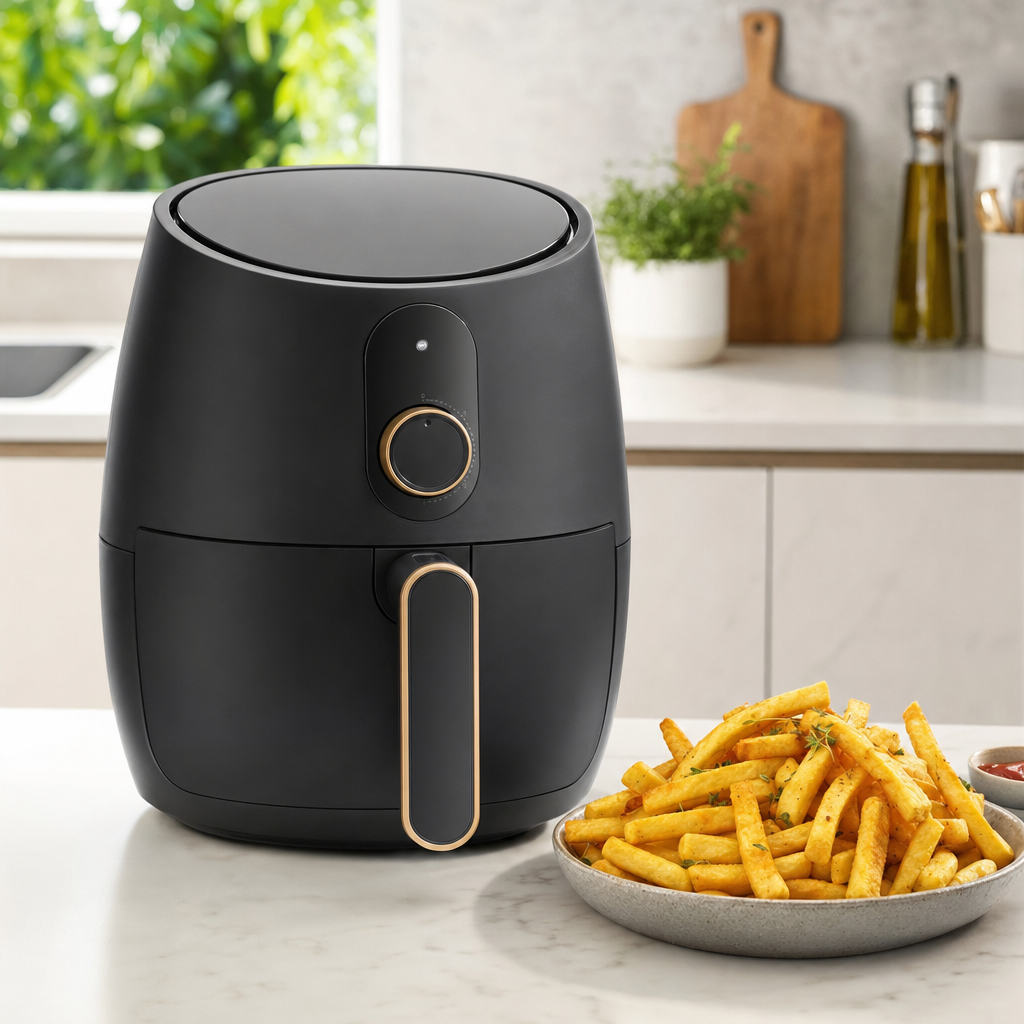
Understanding How Air Fryers Work
When searching for the best air fryer, it helps to understand that these popular kitchen appliances are essentially compact, high-powered convection ovens. Instead of submerging food in vats of boiling oil, an air fryer utilizes a powerful heating element combined with a top-mounted fan to circulate extremely hot air rapidly in a circular pattern around the food. This intense, direct heat creates a crisp exterior texture on foods like french fries, chicken wings, and roasted vegetables while significantly reducing the amount of added fat required compared to traditional deep frying methods.
The technological secret behind achieving that desirable fried texture without actual frying lies in the Maillard reaction and rapid moisture evaporation. As the heated air circulates swiftly across the food surface, it quickly evaporates surface moisture, allowing the outer layers to brown and crisp efficiently. The enclosed basket design, often featuring perforated trays or mesh bottoms, ensures that air flows underneath the food as well, preventing soggy bottoms and guaranteeing even heat distribution throughout the entire cooking cycle without requiring constant manual flipping by the home cook.
Key Capacity and Size Considerations
Selecting the right physical size is crucial when evaluating options, as countertop space and household size dictate whether a compact or large-capacity model is appropriate. Small units, typically ranging from two to four quarts, work wonderfully for single individuals, college students, or couples who prepare modest side dishes and small portions. However, families of four or more individuals generally require larger models boasting capacities of five to ten quarts, or even dual-basket configurations that allow for cooking two completely different foods at distinct temperatures simultaneously.
Beyond interior cooking volume, one must carefully measure available kitchen counter space and overhead cabinet clearance before making a purchase decision. Air fryers require adequate breathing room around their exterior vents to expel hot air safely during operation, meaning they cannot be pushed flush against kitchen walls or tucked tightly into restricted pantry spaces. Additionally, heavier, multi-function appliances featuring toaster oven combinations demand a permanent designated countertop footprint due to their substantial physical dimensions and heavier overall weight profiles.
Essential Features and Control Interfaces
Modern air fryer models offer a wide array of control interfaces, ranging from basic, tactile analog dials to sophisticated digital touchscreens with programmable presets. Analog controls rely on mechanical knobs for setting temperature and time, appealing to users who prefer straightforward, no-fuss operation that can be easily manipulated with greasy or flour-dusted fingers. Digital panels, conversely, provide precise temperature adjustments down to the exact degree and timer increments down to the second, often including pre-programmed settings for specific foods like fish, steak, bacon, and dehydrated fruits.
Basket design and interior coating materials represent another critical evaluation factor for long-term usability, ease of cleaning, and food safety. Most contemporary baskets feature non-stick ceramic or PTFE coatings that prevent delicate foods like fish fillets and melted cheese from fusing to the metal surface. Users should inspect whether the removable crisper plates feature rubber feet to protect the non-stick coating from scratching, and verify if the removable components are rated as dishwasher safe to streamline the post-meal cleanup process significantly.
Practical Guidance for Everyday Cooking
Mastering convection countertop cooking requires adjusting traditional recipes and culinary habits to account for rapid heat transfer and airflow dynamics. Overcrowding the cooking basket remains the single most common mistake beginners make, as stacked food blocks the essential airflow needed to achieve an even, crispy finish. Instead of piling ingredients high, cooks achieve superior results by arranging food in a single, comfortable layer, cooking in multiple sequential batches when preparing larger quantities for dinner parties or hungry families.
Although air frying drastically reduces oil consumption, utilizing a tiny mist of high-smoke-point cooking oil, such as avocado or canola oil, enhances browning and flavor development on vegetables and proteins. Propellant-filled commercial cooking sprays should be avoided because aerosol chemicals can degrade non-stick coatings over time, so using a refillable pump oil mister is recommended. Furthermore, shaking the basket halfway through the cooking time for loose items like potato wedges or Brussels sprouts ensures all sides receive equal exposure to the circulating heat.
Maintenance and Safety Best Practices
Proper maintenance and regular cleaning extend the operational lifespan of a kitchen appliance while preventing unpleasant smoke odors caused by accumulated grease residue. After every single use, the interior basket, crisper tray, and cavity should be washed with warm soapy water and a non-abrasive sponge once the unit has cooled down completely. Allowing grease to bake onto the heating element or basket surfaces during subsequent cooking sessions creates stubborn carbon buildup and produces unwanted smoke that can trigger kitchen fire alarms.
Electrical safety and proper kitchen placement are equally important considerations for safe daily operation in a residential home environment. Air fryers draw significant electrical current, so they should be plugged directly into a grounded wall outlet rather than daisy-chained through extension cords or overloaded power strips that could overheat. Maintaining clear space around the appliance exhaust vents prevents heat damage to surrounding upper cabinets, backsplashes, and nearby small kitchen appliances during extended cooking cycles.
Frequently Asked Questions
Can an air fryer completely replace a traditional oven?
While an air fryer handles many baking, roasting, and reheating tasks remarkably well for small portions, it cannot completely replace a full-sized conventional oven due to its limited interior volume and basket configuration constraints.
Do air fryers require preheating before cooking?
Many modern air fryers do not strictly require lengthy preheating cycles, but running the empty appliance for three to five minutes beforehand ensures optimal searing and crisping results for meats and frozen convenience foods.
What foods should never be cooked in an air fryer?
Foods with wet batters, such as beer-battered onion rings, should be avoided because the liquid batter drips through the basket before the fan can set it, creating a messy heating element and ruined textures.
How do I eliminate stubborn odors from the air fryer basket?
To eliminate lingering food odors, wipe the interior with a mixture of warm water and white vinegar, or slice a lemon in half, rub it across the basket, and run the appliance at a low temperature for five minutes.
Article Was Generated By AI.