
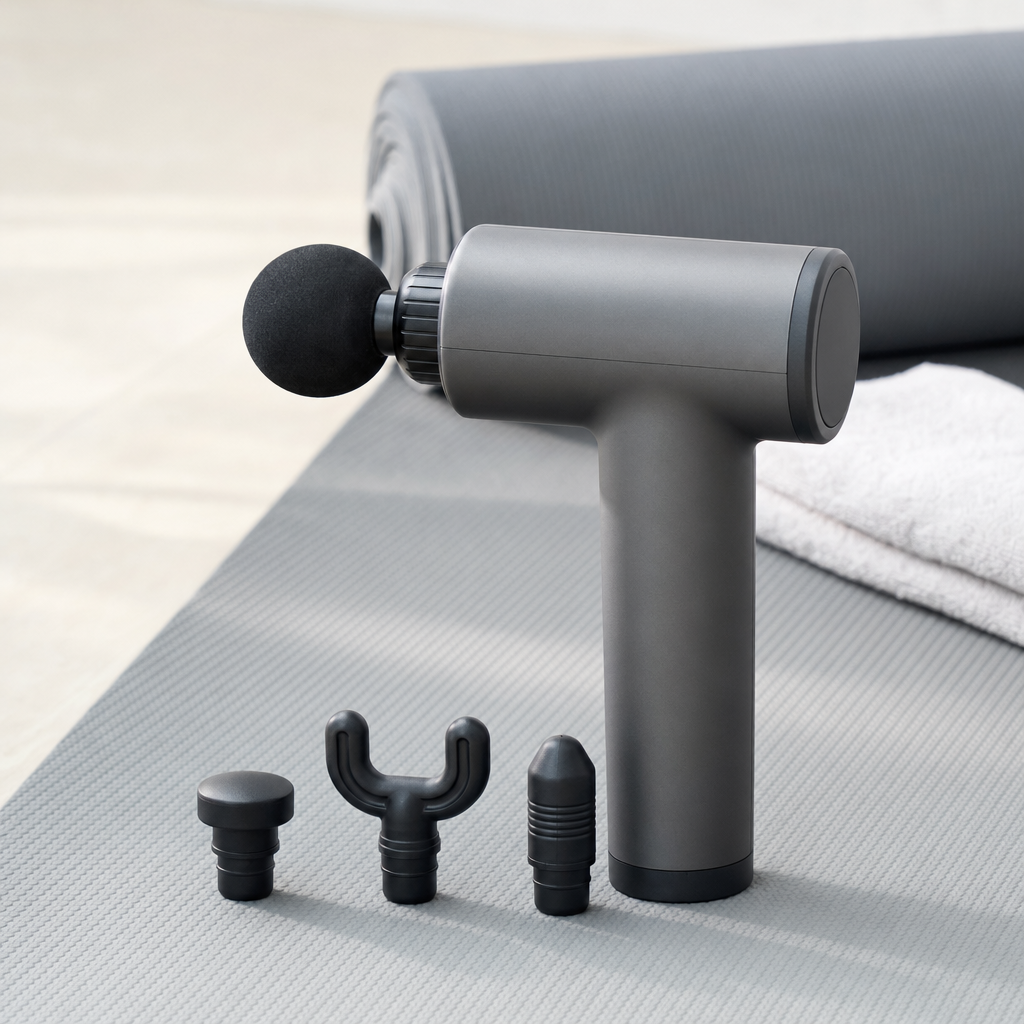
Understanding Percussive Therapy and Massage Guns
The search for the best massage gun often begins with a desire to relieve everyday muscle stiffness after a long day or an intense workout. These handheld devices use percussive therapy, a treatment method that delivers rapid, concentrated pulses of pressure deep into muscle tissue. This mechanical action stimulates blood flow and creates a warming sensation, which many users find helpful for loosening tight knots and reducing overall physical discomfort without needing a professional therapist for every minor ache.
Unlike traditional vibrating massagers that simply rumble against the surface of the skin, percussive devices feature an amplitude that drives the attachment head deeper into the muscle fibers. This targeted approach can help accelerate the warm-up process before physical activity or speed up recovery afterward by flushing out metabolic waste products. Because they are portable and user-friendly, they have become a staple in many home wellness kits, athletic locker rooms, and physical therapy clinics alike.
Key Features to Evaluate When Comparing Devices
When researching the best massage gun for your specific needs, several technical specifications deserve close attention. Amplitude, often referred to as stroke depth, determines how far the head travels and how deep the treatment feels. A deeper amplitude is typically better for large muscle groups like the glutes and thighs, while a shallower amplitude is more comfortable for delicate areas like the upper back, neck, and shoulders, preventing accidental bruising or excessive soreness.
Stall force is another critical metric, representing the amount of pressure you can apply to the device before the motor bogs down and stops. Heavy lifters and professional athletes often prefer a high stall force because they can press hard into dense muscle without interrupting the percussive rhythm. However, everyday users might find an excessively high stall force painful or unnecessary, making adjustable speed settings and interchangeable attachment heads essential considerations for a versatile, customizable experience.
Practical Guidance for Safe and Effective Usage
Using a percussive therapy device correctly is just as important as choosing the right model for your lifestyle. Experts recommend gliding the device slowly across the muscle belly rather than holding it in one static spot for too long, which can cause skin irritation or nerve sensitivity. It is crucial to avoid applying direct pressure to bony prominences, the spine, the front of the neck, and major blood vessels to prevent injury and ensure a safe, beneficial recovery session.
Consistency and moderation are key principles when integrating these tools into a daily routine. Spending just thirty to sixty seconds on a specific muscle group is usually sufficient to elicit a relaxation response and improve localized circulation. Pushing too hard or running the device for excessive durations will not yield faster results; instead, it can lead to acute inflammation or exacerbate existing muscle strains, counteracting the very relief you are trying to achieve.
Common Attachment Heads and Their Specific Uses
Most high-quality percussion devices come with an assortment of interchangeable attachment heads designed for different parts of the human anatomy. The standard ball attachment is universally versatile, making it an excellent starting point for large muscle groups like the quadriceps, calves, and hamstrings. Bullet-shaped attachments offer pinpoint accuracy, which is ideal for working on deep trigger points, tight foot arches, or small muscle knots in the forearms and shoulders.
Fork or dual-pronged attachments are specifically engineered to straddle the spine and neck without putting direct pressure on the vertebrae, promoting safe relief for back tension. Meanwhile, flat or dampener heads are typically softer and wider, designed to cushion the impact when working near sensitive bones or for a gentler overall flush across the entire body. Understanding how to swap and utilize these attachments ensures you maximize the therapeutic benefits of your device.
Portability, Battery Life, and Ergonomic Design
The physical design of a percussive device heavily influences how often and how comfortably you will use it over time. Ergonomic handles with textured grips reduce hand fatigue, especially when reaching difficult angles like the lower back or rear shoulders. Models with rotating or adjustable arms offer even greater accessibility, allowing you to maintain a neutral wrist posture while treating hard-to-reach areas without straining your joints or muscles during self-massage.
Battery longevity and overall weight dictate whether a device is truly travel-friendly for gym bags, office drawers, or frequent vacations. Lithium-ion batteries that provide two to three hours of continuous runtime are ideal, minimizing the need for constant recharging between sessions. Furthermore, considering the noise level is vital if you plan to use the device in shared living spaces, quiet offices, or communal gym environments where loud mechanical buzzing might disturb others nearby.
Frequently Asked Questions About Massage Guns
Can a massage gun completely replace a professional massage therapist?
No, while these devices are excellent for quick, targeted relief of everyday muscle tightness and post-workout soreness, they cannot replicate the intuitive touch, comprehensive assessment, and specialized soft-tissue techniques of a licensed professional.
Is it safe to use a percussive massager every single day?
Yes, using a percussive device daily is generally safe for most healthy individuals, provided you keep sessions short, use appropriate pressure, and avoid sensitive areas like bones, joints, and the front of the neck.
Should I use percussive therapy before or after my workout?
You can use them both before and after exercise. A brief session before activity helps activate muscles and improve range of motion, while a post-workout session aids in relaxation and localized circulation.
Article Was Generated By AI.